
For a long time, the idea of a "smart home" felt like a luxury reserved for tech billionaires or high-end custom builds. We envisioned voice-controlled blinds, automated lighting systems, and complex security grids that required thousands of dollars and professional installation.
Fortunately, the landscape has completely shifted. In 2026, the "smart home tax" is officially a thing of the past. Thanks to universal standards like Matter and the rapid drop in microchip manufacturing costs, you can now build a highly reliable, energy-efficient, and secure automated home for less than the cost of a weekend getaway.
Upgrading your living space doesn't require tearing down drywalls or hiring expensive electricians. By choosing strategic, budget-friendly devices, you can automate your daily routines, protect your property, and slash your monthly utility bills. Let’s explore the absolute best affordable smart home upgrades that deliver the highest return on investment.
The Gateway to Budget Automation: Smart Plugs and Outlets
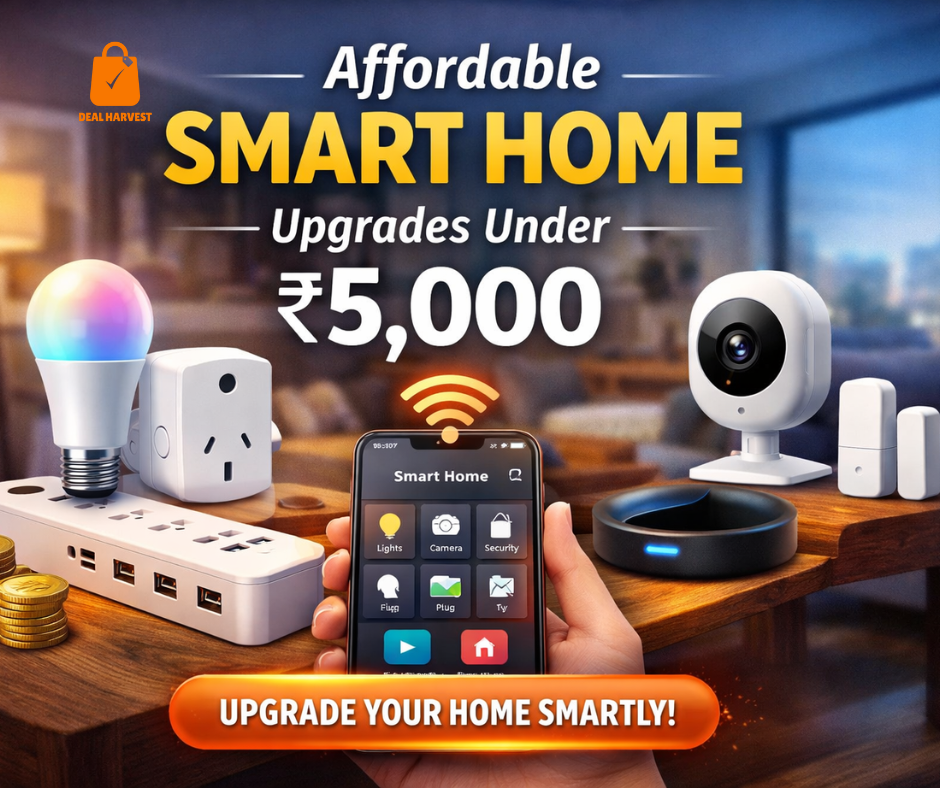
If you are looking for the absolute easiest and cheapest way to start your smart home journey, look no further than the humble smart plug. These tiny adaptors plug directly into your existing wall outlets, instantly transforming any "dumb" appliance into a connected device.
Why Smart Plugs are the MVP of Cheap Tech
A quality smart plug typically costs between $10 and $25, making it an incredibly low-risk investment. Popular options like the TP-Link Kasa Smart Plug Mini (EP25) or the Tapo P110M offer seamless integration with Amazon Alexa, Google Home, and Apple HomeKit.
Because they connect directly to your home Wi-Fi network, you don't need to buy an expensive hub to get started. You simply plug them in, pair them with a free app on your smartphone, and you are ready to go.
Cutting the "Vampire Draw" to Save Real Cash
Many household electronics consume electricity even when they are turned off. This phenomenon—known as "vampire draw" or standby power—can quietly add up to 10% to your monthly electricity bill.
By using smart plugs with built-in energy monitoring features, such as the Sonoff S31 or the Tapo P115, you can track exactly how much power your devices are consuming. You can set automated schedules to cut power to your entertainment center, desktop computer, or gaming console overnight, ensuring they draw zero power when you are fast asleep.
Integrating Legacy Appliances
Do you have a favorite retro floor lamp, a simple space heater, or an old-school drip coffee maker? You don't need to replace them with expensive smart versions.
By plugging them into a smart plug, you can schedule your coffee maker to start brewing the moment your morning alarm goes off, or turn off your space heater remotely if you realize you left it running after leaving the house.
Lighting Your Space Smarter Without Rewiring
Lighting is one of the most impactful ways to change the mood, functionality, and security of your home. It is also one of the most affordable entry points into home automation.
Smart Bulbs vs. Smart Switches: Which is Best?
When upgrading your lighting, you generally have two choices: smart bulbs or smart switches.
- Smart Bulbs (Best for Renters): Brands like Wyze, Kasa, and LIFX offer full-color, hub-free smart bulbs for under $15 to $20 each. They simply screw into your existing light fixtures. However, if someone flips the physical wall switch off, the bulb loses power and can no longer be controlled via your phone or voice.
- Smart Switches (Best for Homeowners): If you want to control overhead ceiling lights or multi-bulb fixtures (like a dining room chandelier), replacing the wall switch is much more cost-effective. A single smart switch under $30 can control an entire bank of inexpensive, regular bulbs.
Creating Ambience and Security on a Budget
Smart lighting is about more than just changing colors for a party. It offers practical safety benefits.
With "Away Mode" scheduling, you can program your lights to turn on and off at random intervals while you are on vacation, making it look like someone is home. You can also pair your bulbs with outdoor dusk-to-dawn sensors so your porch light automatically turns on when the sun goes down.
Under-Cabinet and Accent Lighting with Smart Strips
Want to give your kitchen or TV setup a high-end, architectural look? Inexpensive smart LED light strips can be tucked under kitchen cabinets, behind headboards, or along the back of your television. These strips cost less than $25 and add instant premium warmth and visual depth to any room.
Climate Control and Energy Savings That Pay for Themselves
Heating and cooling make up the single largest chunk of the average household utility bill. Upgrading your climate control is one of the few home improvements that actively pays you back over time.
The Math Behind Smart Thermostats
According to data from EnergyStar.gov, installing an ENERGY STAR-certified smart thermostat can reduce your annual heating and cooling costs by 8%.
If you program your thermostat to set the temperature back by 7° to 10°F for eight hours a day (such as when you are at work or asleep), you can save up to 10% on your energy bills. For most households, a budget smart thermostat will completely pay for itself within the first year of use.
Top Budget Climate Controllers
You don't need to spend $250 on a premium thermostat to get these savings. Excellent budget options exist for well under $100:
- Wyze Thermostat: Retailing for around $60 to $70, this sleek device offers scheduling, remote app control, and compatibility with major voice assistants.
- Amazon Smart Thermostat: Developed in partnership with Honeywell Home, this ultra-affordable unit often drops below $60 and works seamlessly with Alexa to automatically adjust temperatures based on your daily routines.
Budget-Friendly Security and Peace of Mind
Home security used to require locked-in, multi-year contracts with professional monitoring companies. Today, you can build a highly effective DIY home security grid for less than a single month of traditional monitoring fees.
Smart Cameras with Local Storage (No Subscriptions!)
The biggest trap in modern smart home security is the monthly subscription fee required to view recorded footage. Fortunately, in 2026, many budget-friendly cameras offer local microSD card recording, allowing you to bypass monthly cloud fees entirely.
The TP-Link Tapo and Wyze Cam lines offer indoor and outdoor 1080p and 2K cameras for under $35 to $50. By inserting a cheap microSD card into the camera, you get continuous, rolling video archives with no recurring costs.
Video Doorbells and Entry Sensors
A video doorbell is your home's first line of defense. Budget doorbells under $70 let you see, hear, and speak to delivery drivers or visitors from anywhere in the world.
For interior security, you can place cheap contact sensors (usually under $15 a pair) on your front door, back door, and ground-floor windows. These sensors can send an instant notification to your phone the moment a door or window is opened when you are away.
Smart Smoke Detectors and Water Leak Sensors
When we think of home security, we often think of intruders. However, water damage and fire pose a much more common threat to your wallet.
Placing small, battery-powered water leak sensors (around $15 each) under your kitchen sink, washing machine, or water heater can alert you to a slow leak before it turns into a catastrophic, multi-thousand-dollar flood.
The Smart Ecosystem and Hub Strategy
The secret to a successful, frustration-free smart home is ensuring that all your devices can easily talk to one another.
Why Matter and Thread Change the Game
In the past, you had to carefully check if a device worked with Apple, Google, or Alexa. Today, the unified smart home standard called Matter has simplified everything.
When shopping for budget gear, look for the Matter logo on the packaging. This standard guarantees that the device will work seamlessly across different brands and voice assistants, future-proofing your investment.
Choosing Your Smart Home Brain
You don't need to buy a dedicated smart home hub to manage your budget setup. You can use a cheap smart speaker as your central control point:
- Amazon Echo Dot: A fantastic, budget-friendly voice controller that frequently goes on sale for under $35.
- Google Nest Mini: An excellent choice for those integrated into the Google ecosystem, offering stellar voice recognition.
- Apple HomePod Mini: While slightly more expensive, it serves as a highly secure hub for Apple HomeKit users.
DIY Automation: IR Blasters and Smart Relays
Do you have an old TV, a window air conditioner, or a stereo system that uses an infrared (IR) remote control? You can bring them into your smart home ecosystem using a smart IR blaster (like the BroadLink RM4 mini) for under $25. These little pucks mimic your remote control's signals, allowing you to turn on your legacy TV or adjust your old window AC unit using voice commands or smartphone apps.
Real-World Case Study: A $150 Smart Home Makeover
To see how far your money can go, let’s look at a practical, real-world budget layout. If you have $150 to spend, here is how you can completely transform a standard apartment or small home:
| Device Type | Specific Product Recommendation | Estimated Cost | Primary Benefit |
|---|---|---|---|
| Smart Speaker | Amazon Echo Dot (5th Gen) or Google Nest Mini | $35.00 | Hands-free voice control and central automation hub. |
| Smart Plugs | TP-Link Kasa EP25 (2-Pack) | $25.00 | Automates coffee maker and cuts standby power on TV setup. |
| Smart Bulbs | Wyze Bulb Color (2-Pack) | $25.00 | Custom ambient lighting and vacation scheduling. |
| Security Camera | TP-Link Tapo C210 (Indoor Pan/Tilt) | $30.00 | High-definition pet monitoring and home security with local storage. |
| Water Sensor | Govee Water Leak Detector (2-Pack) | $20.00 | Placed under kitchen sink and water heater to prevent floods. |
| Total Investment | $135.00 | A fully connected, safer, and energy-efficient home. |
Frequently Asked Questions (FAQs)
Do I need a hub for budget smart devices?
No. Most budget-friendly smart devices (like those from Kasa, Wyze, and Tapo) connect directly to your home’s 2.4GHz Wi-Fi network. You only need a smartphone to set them up. However, having a smart speaker like an Echo Dot or Nest Mini makes controlling them much more convenient.
Will cheap smart devices slow down my Wi-Fi?
If you connect dozens of individual Wi-Fi smart devices directly to a basic router provided by your internet service provider, you might notice some slowdown. For homes with more than 15 to 20 smart devices, we recommend upgrading to a budget mesh Wi-Fi system or choosing devices that use low-power protocols like Zigbee or Thread.
How much money can smart home upgrades actually save?
By combining a smart thermostat (saving ~8% on heating and cooling) with smart plugs that cut off standby power to electronics, the average household can easily save $100 to $150 per year on utility bills. This means your initial investment can fully pay for itself within 12 to 18 months.
Are cheap smart home devices secure?
Security is a valid concern. To protect your home network, always buy from established brands (like TP-Link, Wyze, or Amazon) rather than completely unknown, generic manufacturers. Make sure to change the default passwords during setup, enable two-factor authentication (2FA) on your accounts, and keep your device firmware updated.
Conclusion
Upgrading to a smart home in 2026 is no longer about showing off expensive gadgets; it is about making your living space highly functional, safe, and cost-effective. By starting small with a few smart plugs, a budget thermostat, or a couple of smart bulbs, you can experience the immediate convenience of home automation without straining your budget.
Remember, you don't have to buy everything at once. Build your system gradually, focus on devices that solve your specific daily annoyances, and enjoy the process of turning your house into a highly efficient, responsive home.
References
- EnergyStar — Summary of Smart Thermostat Market Savings and Efficiency Standards, 2026
- Wired Dwelling — Affordable Smart Home Devices That Actually Work in 2026, 2026
- Grahammiranda — Affordable Smart Home Upgrades: Budget Devices & DIY Automation, 2025
- The Dollar Stretcher — Smart Home Upgrades That Can Save Money Over Time, 2026
- American Choice — Smart Home Upgrades Under $200 That Actually Increase Your Home’s Value, 2026