
Have you ever walked through your front door only to immediately trip over a stray shoe, drop your keys onto an overflowing table, or struggle to find a place to hang your coat? You are not alone. The entryway is the first thing we see when we come home, yet in compact apartments, historic houses, and modern townhomes, it is often the most neglected and cramped space in the entire floor plan.
In 2026, the trend of maximizing every square inch of our homes has reached a new peak. We no longer have to choose between a cluttered, chaotic drop zone and a cold, sterile minimalist corridor. With smart planning, creative furniture choices, and a few clever design tricks, even the tightest foyer can become an organized, beautiful, and welcoming transition zone.
Whether you are dealing with a narrow hallway, an open-concept living room that lacks a proper foyer, or a tiny apartment entrance, this comprehensive guide covers the best entryway storage ideas for small spaces to help you reclaim your home’s first impression.
The Anatomy of a High-Functioning Small Entryway
Before buying bins or drilling hooks into the wall, it is important to understand how a successful entryway actually functions. Think of your entry as a machine with moving parts. If one part is missing, the whole system breaks down, resulting in shoes piled on the floor and mail scattered across the kitchen counter.
The Concept of the "Drop Zone"
A successful entryway relies on a designated drop zone. This is the specific spot where you shed the outside world. A complete drop zone requires three basic elements:
- A landing pad for small items: A place for keys, wallets, sunglasses, and mail.
- Hanging storage: For coats, bags, umbrellas, and hats.
- Shoe containment: A dedicated spot to keep dirty footwear off the main walkway.
By analyzing your daily routine, you can pinpoint exactly where your current setup fails. Do you drop your keys on the dining table? You need a small bowl or shelf right by the door. Do coats end up draped over the back of the sofa? You need more accessible hooks.
Why Verticality is Your Best Friend
When floor space is at a premium, the only way to go is up. Vertical storage is the golden rule of small-space design. By utilizing the wall space from floor to ceiling, you can easily triple your storage capacity without sacrificing a single inch of walkable floor area. High shelves can hold seasonal items you rarely use, while lower hooks keep everyday essentials within arm's reach.
Multifunctional Furniture: The Ultimate Space Savers
When you have a small entryway, every single piece of furniture must earn its keep by serving more than one purpose. Single-use items are a luxury that tight entryways simply cannot afford.
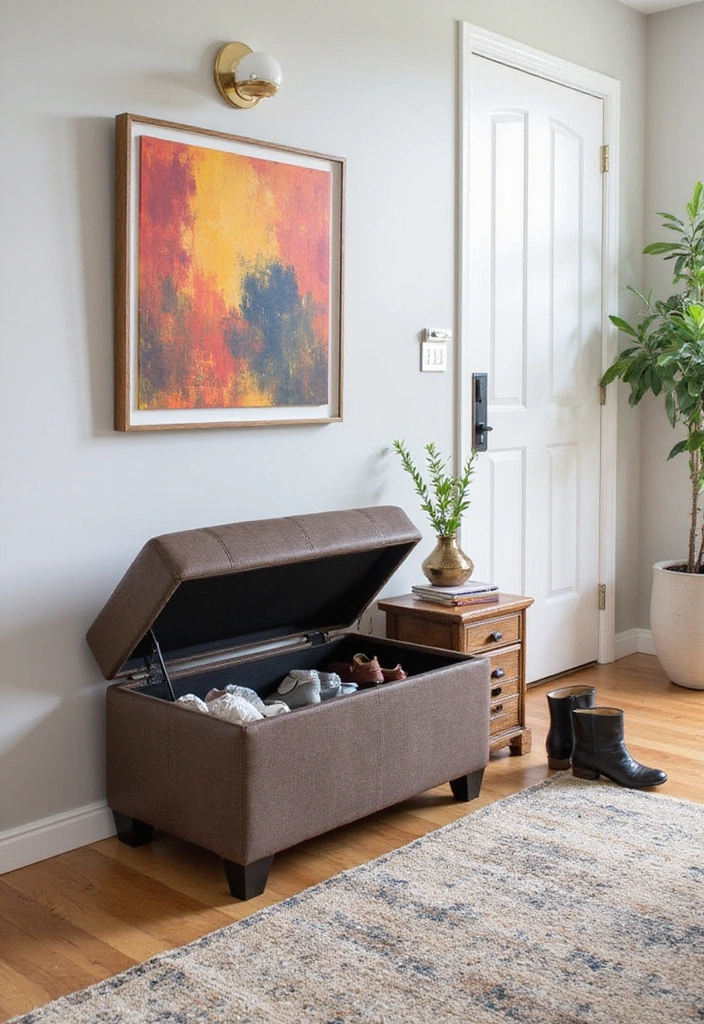
Benches with Hidden "Shoe Garages"
A bench is a wonderful addition to any entrance because it offers a comfortable spot to sit and pull on your shoes. However, a standard bench leaves valuable space underneath completely unused.
Instead, look for a lift-top storage bench or a bench featuring a built-in "shoe garage" underneath the seat. These designs allow you to slide shoes, dog leashes, or reusable shopping bags completely out of sight. Keeping the floor clear of visual clutter instantly makes a small entryway feel larger and more organized.
Ultra-Slim Hallway Consoles with Hidden Tech
If your entryway is actually just a narrow hallway, a traditional console table will block the path and make the space feel like a bottleneck. The solution is an ultra-slim console table, specifically one with a depth of 8 to 10 inches.
Many modern 2026 designs feature hidden charging drawers. These drawers keep messy charging cords, phones, and smartwatches tucked away while they power up, ensuring your entryway stays calm, clean, and completely wire-free. Pair the console with a stylish tray on top to catch loose change and keys.
Creative Vertical Storage Hacks for Narrow Hallways
If your entryway is so narrow that even a slim console table blocks the walkway, it is time to look at your walls. Wall-mounted storage solutions are highly customizable and can be tailored to fit any architectural quirk.
Floating Shelves and Low-Profile Hooks
Floating shelves are a brilliant way to add surface area without the visual weight of heavy furniture. A shallow floating shelf mounted at waist height can act as a minimalist console table. You can place a small mail organizer on top and mount a row of low-profile hooks directly underneath it for bags and jackets.
Because floating shelves don't have legs, they leave the floor completely open. This openness allows light to pass through, creating the illusion of a wider hallway.
Behind-the-Door Drop Zones
When you literally have zero wall space to spare, look behind your front door. The space behind an open door is often completely wasted.
By installing a behind-the-door drop zone, you can make use of this hidden real estate. Mount a series of ultra-slim, heavy-duty hooks directly to the wall behind the door for coats and bags. You can also place a low-profile, heavy-duty rubber shoe tray on the floor to catch wet boots and keep dirt from spreading onto your clean floors.
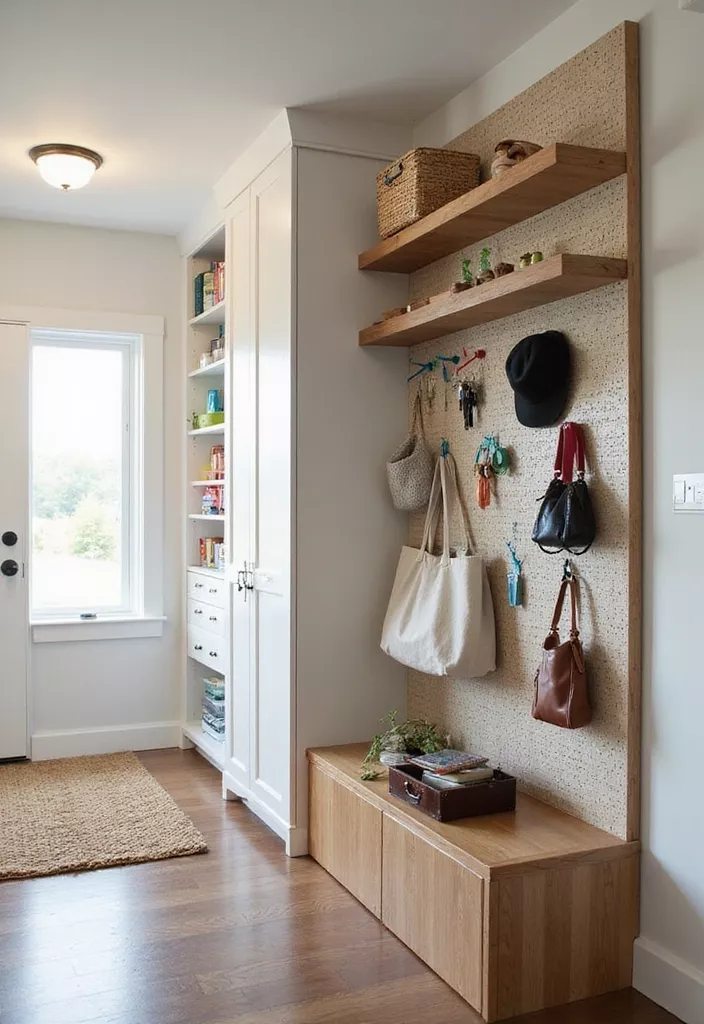
Pegboards and Modular Wall Systems
For ultimate flexibility, consider a modular pegboard system. Popularized by modern Scandinavian design, wooden pegboards allow you to move shelves, pegs, and small hanging baskets around whenever your storage needs change.
In the winter, you can move shelves higher to make room for long, heavy coats. In the summer, you can lower them to create easy-to-reach spots for sun hats and beach bags.
Specialized Storage Solutions for Tricky Layouts
Not everyone has a standard rectangular hallway. Many homes feature awkward layouts that require a bit of creative thinking to solve.
The Under-Stair Micro Mudroom
If your front door opens directly next to a staircase, you might feel like you have nowhere to put your things. However, that awkward triangular space under the stairs is actually a goldmine for storage.
By building a micro mudroom cubby wall under the stairs, you can create custom slots for shoes, built-in cubbies for baskets, and a cozy recessed bench. This turns an awkward architectural feature into the highly functional focal point of your entire home.
No-Drill Japandi Setups for Renters
Renting an apartment often means you cannot drill heavy anchors into the walls to mount floating shelves or heavy coat racks. Fortunately, you can still create a stunning, highly functional entryway using temporary, damage-free solutions.
The no-drill Japandi style is incredibly popular for rentals in 2026. This aesthetic combines Japanese minimalism with warm Scandinavian functionality. To achieve this look without damaging your walls:
- Use a free-standing, narrow wooden coat rack or a leaning ladder shelf.
- Incorporate lightweight woven storage baskets to hide shoes and accessories.
- Hang lightweight art or a small mirror using heavy-duty, damage-free adhesive strips.
- Stick to a soft, neutral color palette of light oak, cream, and beige to keep the space feeling calm, organic, and open.
Corner Entryway Workarounds
When your front door opens directly into a corner of your living room, you don't have a defined foyer. You can easily create the illusion of a separate entryway by using a corner hall tree. These specialized furniture pieces fit snugly into a 90-degree corner, providing hooks, a small bench, and shoe storage in a remarkably small footprint.
Aesthetic Tricks to Make a Tiny Foyer Feel Twice as Big
Storage is only half the battle. To make your small entryway a truly welcoming space, you need to use design elements that trick the eye into perceiving more space than actually exists.
Strategic Mirror Placement
Ask any interior designer, and they will tell you that mirrors are the number one tool for expanding small spaces. Hanging a large mirror in a cramped entryway does two things: it reflects light into dark corners, and it creates the illusion of depth.
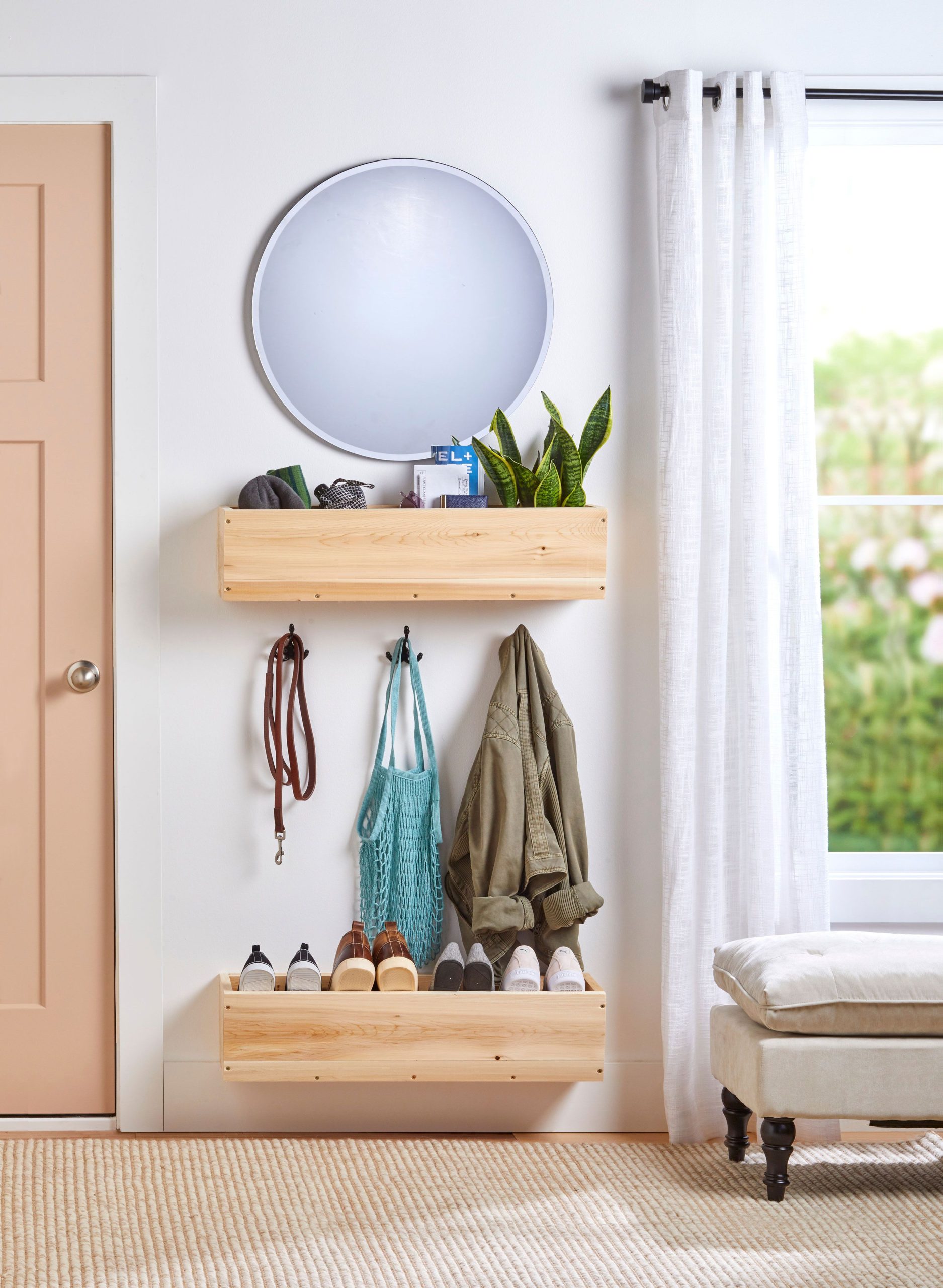
For the best results, hang a large round mirror or a tall arched mirror directly above your console table or floating shelf. If possible, position the mirror so that it reflects a window or an open doorway to maximize the amount of natural light bouncing around the space.
Monochromatic and Light Color Palettes
Dark, heavy colors tend to make walls feel like they are closing in on you. In a small entryway, it is best to stick to light, neutral color palettes.
Consider painting the walls, trim, and even your storage furniture in different shades of the same light color—such as warm off-white, soft cream, or pale gray. This monochromatic approach erases visual boundaries, making the walls blend together seamlessly and making the entire area feel significantly wider and airier.
Lighting Hacks: Recessed and Motion-Sensor Fixtures
A dark entryway feels instantly smaller and more cluttered than a well-lit one. Because small entryways rarely have windows, you need to bring in your own light.
- Recessed LED ceiling lights: These provide clean, even overhead light without taking up any physical space.
- Motion-sensor lights: Installing a small, battery-operated motion-sensor light inside your entryway closet or under a floating shelf ensures you can always find your keys and shoes, even when walking home in the dark.
- Sconces: Wall-mounted sconces add a touch of warmth and elegance without requiring valuable table space.
Real-World Step-by-Step Entryway Organization Plan
Ready to transform your own small entryway? Follow this simple, actionable five-step plan to get your space organized and looking beautiful.
| Step | Action Item | Goal |
|---|---|---|
| Step 1 | Declutter Completely | Remove absolutely everything from your current entryway. Sort items into three piles: Keep, Relocate, and Donate/Discard. Only keep items you use daily in this space. |
| Step 2 | Measure Twice | Carefully measure your entryway width, wall space, and the clearance behind your front door when it is fully open. Keep these measurements on your phone when shopping. |
| Step 3 | Install Vertical Storage | Mount your hooks, floating shelves, or pegboards. Ensure hooks are placed at comfortable heights for everyone in your household. |
| Step 4 | Add Multifunctional Furniture | Position your slim console table or storage bench. Ensure it does not block the natural walking path into your home. |
| Step 5 | Style and Personalize | Add a large mirror, a washable area rug to catch dirt, a small catch-all tray for keys, and a single decorative element like a small plant or vase. |
Frequently Asked Questions
How do I store shoes in a very narrow entryway without a closet?
The best solution for shoe storage in a narrow entryway is an ultra-slim, tipping shoe cabinet (such as the popular IKEA Stall or Trones systems). These cabinets are incredibly shallow—often less than 7 inches deep—because the shoes are stored vertically inside compartments that tilt open. This keeps your shoes completely hidden, organized, and off the floor without blocking your hallway.
What can I do if my front door opens directly into my living room?
If you don't have a formal entryway, you can easily create a "zone" using furniture placement. Place a slim console table or the back of a sofa a few feet away from the door to act as a physical divider. Add a small, distinct area rug directly in front of the door to visually define the "entryway" boundaries, and mount a few stylish wall hooks nearby to catch your coats and bags.
How many hooks do I need in a small entryway?
As a general rule of thumb, you should aim for two hooks per family member. This allows one hook for a primary daily coat and one hook for a bag or backpack. To keep the space from looking cluttered, encourage family members to store seasonal or rarely worn coats in a bedroom closet rather than leaving them all hanging in the entryway.
Are open storage baskets better than closed drawers for small spaces?
Both have their place, but closed storage (or opaque baskets) is generally much better for small spaces. Open storage baskets can quickly look messy if their contents aren't perfectly folded or organized. Opaque woven baskets, canvas bins, or closed drawers allow you to quickly toss items inside while keeping the visual appearance clean, uniform, and clutter-free.
Conclusion
Creating a functional and stylish entryway in a small space does not require a massive budget or a major home renovation. By focusing on vertical storage, choosing multi-functional furniture like slim consoles and storage benches, and using smart design tricks like strategic mirror placement, you can easily turn even the smallest foyer into an organized, welcoming gateway to your home.
Remember, the key to keeping a small space tidy is constant maintenance. Take a few minutes at the end of every week to clear away items that don't belong in your entryway, and enjoy the peace of mind that comes with walking into a clean, organized, and beautiful home.
References
- MaterialSix — 35 Small Entryway Ideas for Small Spaces That Look Amazing and Work Hard, 2026
- Artevo Home — 25 Small Entryway Ideas That Make Tiny Spaces Look Bigger (2026 Guide), 2026
- Placeideal — 35 Small Entryway Ideas That Maximize Style and Storage in Every Corner of Your Home, 2025
- Brewed Leaf Love — Small Entryway Ideas: 60 Stylish Ways to Make the Most of Your Space, 2026
- The Spruce — 31 Small Entryway Ideas That Are Sleek and Stylish, 2025